
KEYNOTE SPEECH DELIVERED BY H.E BABATUNDE RAJI FASHOLA, SAN AS GUEST SPEAKER AT THE NICHE 2022 ANNUAL LECTURE ON THURSDAY SEPTEMBER 8, 2022 AT THE MUSON CENTRE, LAGOSThe theme chosen by Acclaim Communications Ltd,
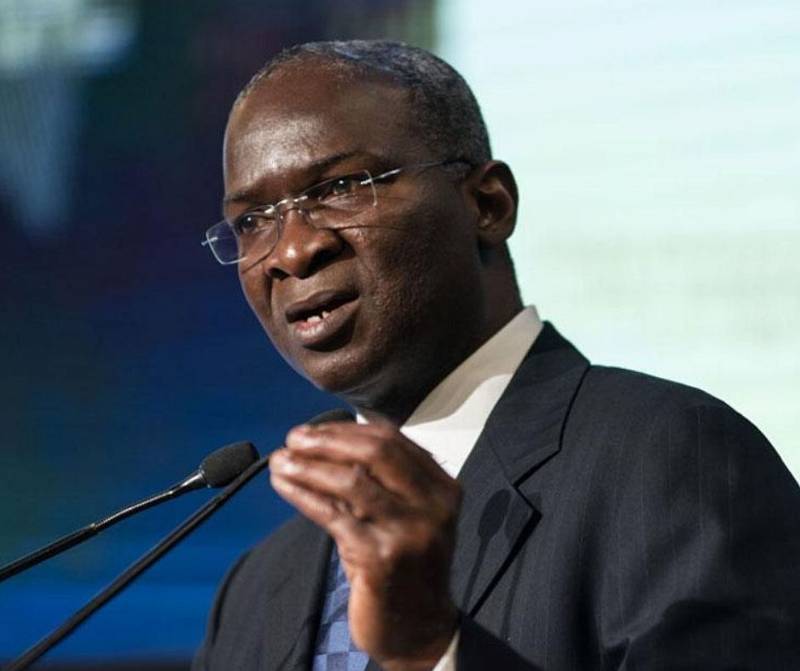
for this year’s annual lecture, which is “2023 AND THE FUTURE OF NIGERIA’S DEMOCRACY” was perhaps too tempting for me to resist, and the invitation, issued since April 20, 2022, was more than timely, which is not easy to say these days for some speaking events.Given that we are 20 Days to the formal commencement of campaigns for the 2023 general elections, this year’s annual lecture coming 170 days to the first of the elections in February 2023 provides a potential platform for many possibilities.However, I have elected not to be partisan, and instead chosen to be even-handed, I believe this is the challenge, albeit self-imposed that the theme of the lecture now presents.Let me start from the beginning about the 2023 general elections.Shortly after the announcement of the results of the 2019 General Elections proclaiming the victory of President Muhammadu Buhari, and whilst the opposition petition in the election tribunal was still pending, I started hearing talk of 2023.Initially I dismissed it as offhanded or, at the worst, isolated but it turned out that I was mistaken; it continued.Therefore, long before the Presidential Election petition was resolved and before Buhari was sworn in for a second term in 2019, talk of the 2023 election, especially the presidential one, had started gathering momentum.This is the context in which I present my thoughts about the 2023 General Elections and Nigeria’s democracy.Therefore, you can see that rather than focus on what was going to happen to our lives as a result of the new mandate, now clearly won and lost as determined by the Election Tribunal, some were already thinking about the next election.So, it should not surprise anyone when you hear rhetoric like: “this will be a most defining election,” “this will be an election like no other,” and so on and so forth.But truth be told, this rhetoric is common in every democracy and at the onset of a new election cycle.This is understandable because no two elections are the same; and the intensity always varies anyway as indeed the number of voters and sometimes the number of parties; and the novelty of some candidates.Unlike economists who urge the probability that “all things being the same,” politics and elections draw their oxygen from the probability that things will not remain the same, especially if you are in opposition.For example, young people who were by age not eligible to vote in a previous election, would have attained voting age at the next election cycle and become eligible to vote if they register.In our current situation we now have 12,332,336 newly registered voters for the 2023 election, whereas there were 14,360,053 newly registered voters in 2019, while 6,944,752 registered as new voters in 2015.So, if the hype about 2023 is anything to go by, the number of 12,332,366 newly registered voters does not support it, because it is 2,027,687 less than the 14,360,053 newly registered voters in 2019.Obviously, we have seen all the hype before and they detract from the real question which in my view should be: how can democracy, especially the 2023 elections, make our lives better and our country greater?I think we should focus on this question because we must remember that democracy is simply concerned about the popular participation in choosing a leader or set of leaders.Democracy does not guarantee that the leader or those leaders will deliver or indeed are able to deliver on what we want.Put conversely, what really is it that we expect from those we elect and what do they promise to do before we vote, and what have they done for us?Did we vote for, or did we collect tricycles, sewing machines, generators etc. from them?If we did, can we legitimately expect that the budget from which these things were procured will also provide healthcare, drugs and diagnostic equipment in our health facilities?If they have sponsored weddings for our families, financed the burial of our dear departed ones or paid school fees for a whole community do we understand that these things or some of them are funded by the budget from which we also expect good schools, good roads and other public infrastructure and services upon which our prosperity depends collectively?Put differently, how many of us who vote truly understand how the process works?How many of our electorate understand what the actual constitutional roles of our legislators, Local Government Chairman, Governors, and President are?These questions may look ordinary, but my experience in government suggests that they are not. I have been surprised by how unfamiliar some of us are with the constitution and our responsibilities, although I must concede that we are fairly well acquainted when it comes to our rights.Truth be told, elections are only a part of the democratic process; and this requires not only the successful party to play their role in the formation and running of government, but the opposition as watchdog, and government in waiting, has an equally important role to play in enriching the process.Governance in power is not easy, and I daresay opposition is even more hard work.Let us ask ourselves when last an opposition party prepared and detailed an alternative budget to that of the party in government.True enough, we hear criticisms of what the party in Government is not doing or getting right; but when I ask, can you recall an opposition party offering a credible and alternative solution to what the party in Government has done wrong.To be fair I must acknowledge the generalizations such as we will do this and do that, but very often that is where it ends.On the question of revenue or lack thereof for example and the borrowing by Government, apart from the legitimate concerns about borrowing which are rightfully expressed, I have challenged the critics to provide the alternative; and I am still awaiting a response.If you listen to any of the several Morning shows the issue will come up and you will hear the criticisms, which are legitimate, but you will not get any credible answer to the question – what are the alternatives?The answer must lie somewhere between cutting waste, reducing the size of Government, raising taxes, stopping some programmes, projects or policies.But who is ready to have these conversations in real politics?This is something we must demand in the run up to the 2023 General Elections in ord
About Author