
Insecurity in Nigeria The need for Emergency_ _Intervention Fund_(EIF) _for_ the Nigeria Police_ _Force_
*OPEN LETTER TO* *PRESIDENT BOLA* AHMED TINUBU,GCFR PRESIDENT AND COMMANDER-IN-CHIEF OF THE ARMED FORCES FEDERAL REPUBLIC OF NIGERIA.
May I begin this open letter by thanking
Mr. President, Asiwaju Bola Ahmed Tinubu GCFR for appointing one of Nigeria’s finest police officers, Tunji Disu as the new Inspector General of Police.
In one respect, this open letter is to help the new IGP to carry out a radical transformation of the Nigeria Police and possibly achieve greater success than his predecessors. Towards this end, I’m beaming a search light on serious setbacks which if eliminated would enhance the success of the new IGP. These identified setbacks had obviously posed serious obstacle to the success of the past Inspectors General of Police. These include:
1. _Lack of Emergency_ _Intervention Fund (EIF) for the Nigeria Police_ Force .
Since Alhaji Shehu Shagari’s administration ended on December 31, 1983, in a military coup, there has not been any emergency intervention fund for the Nigeria Police by any successive president in Nigeria till date.
2. _Achieving success is an uphill task_ _without adequate_ funding,
One needs not over-emphasize the fact that achieving success is an uphill task without adequate funding.
We all know the impact of adequate funding in ensuring the effectiveness and success of any organization, an enterprise or an agency, but when it is not adequately funded, it is always an uphill task to expect effectiveness or positive result.
3. During the Shehu Shagari tenure (1979–1983), the Nigerian leadership executed a planned strategy to restructure the Nigeria Police Force (NPF). This step was prompted by a longing to bolster the Police’s function in internal security and authorize the police as the lead agency for internal security.
_Equipment and_ strategy under Shagari.
The government invested heavily in police gear and Tactical Hardware like Armoured Personnel Carriers (APCs), assault rifles, and other advanced arms precisely for the police.
_Specialized Units:__ Shagari’s cabinet created Special Weapons and Tactics (SWAT) teams and increased the mobile police units throughout the nation to combat internal risks.
_Intelligence_ _Expansion:The_ police intelligence wing was considerably strengthened to evolve from reactive to proactive crime avoidance modernization.
4. _No Helicopter Service for_ _Accelerated_ _Operations._
South Africa has about 47 police helicopters with a population of about 65million people whereas Nigeria with a population of over 240million people has less than 3 functional police helicopters. This gap is obviously too wide in spite of our large population and skyrocketing crime rates. At least 50 helicopters are required by the Nigeria Police Force for the personnel to be able to contain criminal and operational activities more effectively in Nigeria
5. _Inadequate_ _Operational Vehicles._
The Nigeria Police Force does not have adequate operational vehicles. At least 500 operational vehicles are required for each of the 36 states and FCT, Abuja to enable the police carry out their operations effectively. Furthermore, some high ranking officers such as Area Commanders and DPOs etc. do not have official vehicles.
6. _Nigerians Fund their Cases Taken to the Police._
Any case involving logistics, transportation or investigation more often than not is funded by the person who brought the case to the Nigeria Police. This is quite opposite to what obtains in the western countries and even in some developing countries of Africa. Ironically, when it comes to other security agencies like the EFCC, government funds investigations of cases brought to the agency. That is why EFCC is one of the most effective Agencies in Nigeria.
7. _Lack of Motivated_ _Police Force_
The living condition of Nigeria police officers, especially the junior ranks are among the most deplorable in the country. Look at the unsightly state of our police barracks all over the country. Policemen are poorly paid. Also, how can you pay a retirement benefit of just about N2.5million in today’s Nigeria, after a police officer has served the country for 35yrs? Furthermore, the current pension scheme of the Nigeria police should be upgraded to be at par with that of other security agencies such as the Nigerian Armed Forces.
8. _Lack of Respect for the Nigeria Police by members of the public_
The Nigeria Police Force has long struggled with earning the respect of the public they serve. They do not enjoy adequate respect and appreciation from members of the public. Several factors on the part of the Nigeria Police Force such as corruption, brutality and inefficiency contribute to this negative image, which mostly boils down to poor funding and poor standard of living. When you go to other countries, especially the Western countries, one would feel proud to take a photo shot with their police officer. How come no one is desirous of doing the same with Nigeria police. I personally rate the Nigeria police among the best in the world given the conditions under which they operate without the necessary tools.
9. _Redundancy of some_ of the MOPOLs Withdrawn from VIPs. Withdrawing 11,566 Mobile police officers from VIPs in Nigeria was an excellent move by Mr. President, Asiwaju Bola Ahmed Tinubu to boost security in the country. However, most of the MOPOLs are now redundant. That may make them to constitute a security risk.
10. _Inadequate Security on our highways._
Police security activities on our highways are grossly inadequate. Criminals know this and they exploit this weakness to increase criminal exploit. That is why robbery, kidnapping, and banditry thrive on our highways. There is also a high rate of travel insecurity in Nigeria. Passengers and drivers face risks, impacting transport costs and travel. This also has adverse economic impact. Supply chains and trade are disrupted. Leveraging intervention fund, the redundant MOPOLs can be assigned to boost security on our highways with operational vehicles. There is also the need to create buffer zones for the Nigeria police on the highways at the former tollgate locations and also build new mini-barrack outposts strategically located along our highways throughout the country to provide places for officers on duty to rest, change and take their bath.
11. _Absence of_ _Comprehensive and_ _Interconnected_ _Data-base._
The absence of a comprehensive and interconnected database in the Nigeria Police Force leads to inefficient investigations. Lack of data sharing hinders the ability to track criminals. Investigations slow down due to missing information. Crime patterns cannot be tracked due to lack of centralized data. Therefore, there is no deterrence because every criminal no matter the number of times he or she has committed crime, is always treated as a first-time offender. There is no adequate infrastructure for proper crime documentation by the police. This also leads to waste of resources due to duplication of efforts and poor resource allocation.
12. _Nigeria Police Force not being_ _accorded the_ _relevance it deserves by the Federal_ Government.
The importance of the police force in our country with skyrocketing crime rates on a daily basis cannot be over-emphasized. There are a number of countries in the world without an Army, but there is no country without the police force. Surprisingly, the same government that adequately funds other government agencies , is unable to fund the Nigeria police effectively. This clearly shows that in spite of the importance and indispensability of the police force, the Federal Government does not accord it the importance it deserves in the country, today Nigeria Police is embarrassed on daily basis via social media, it boil down to poor funding, how many junior officers can afford android phone or follow trends on social media
13. Lack of Adequate_ _Training of the_ _Nigeria Police_ .
The effects of office inadequate training for the Nigeria Police are numerous. They include poor handling of cases, ineffective crime-solving skill, missed evidence, poor investigation, escalation of conflicts, use of excessive force, human right abuse, unprofessional conducts and low public trust. The Nigeria Police Force should be thoroughly trained on modern security courses such as cybersecurity, intelligence and investigation etc. Those trained in any of these areas should graduate and serve based on their respective areas of competence.
14. _Police Recruitment_ _Process Based on Quota System_ _Rather than Merit._
The current recruitment process needs to be redefined. Younger and vibrant Nigerians who studied modern security course such as cybersecurity, criminology, forensic investigation, drone piloting, intelligence, Information Technology ,new media etc. should be recruited to inject fresh energy into the Nigeria Police Force if we are to achieve modern and technology driven policing. Policing is a profession and must be treated as such. To achieve excellence, recruitment in the Nigeria Police should be based on merit rather than the current quota system. IGP is not in charge of recruitment. It is the responsibility of the Police Service Commission. The Federal Government needs to develop new recruitment criteria for Police Service Commission.
15. _Funding of Nigeria Police_ _Institutions_ _Not_ _Backed Up by the_ Acts of Parliament.
The government needs to directly fund the institutions of police and same needs to be backed up by Act of Parliament as it does to other government establishment such as NIPS, NIIA ,NIMASA etc. Institutions of the Nigeria police force such as Police Colleges, Police Academy, Police Staff College, Jos, Police Detective College, Enugu, Police School of Communication, Ikeja and Police School of Intelligence, Kwara etc. should enjoy direct funding from the Federal Government backed up by Acts of Parliament to make such funding mandatory, ensure continuity and be sustained by successive governments.
The major problem of the Nigeria Police Force is the fact that it has been grossly under-funded. What I am advocating for, is emergency intervention fund (EIF)for the Nigeria Police not budget funding. It will be very difficult if not impossible for any Police Officer appointed to head the Nigeria Police to effect significant positive changes in the police force without an emergency intervention fund.
The problem of the Nigeria Police Force is so huge and multi-facetted that it cannot be effectively solved by budget funding. An Emergency Intervention Fund (EIF)of at least 3 trillion Naira should be created to be headed by a technocrat like Aliko Dangote and supported by other members with high integrity such as Bishop Matthew Kukah, Dr. Ayo Ogunsan, Omoyele Sowore, Charles Oputa etc. as well as select officers of the Nigeria Police Force. Adequate funding of the Nigeria Police is not an issue to be taken lightly or treated with indifference if we are to expect efficient policing in Nigeria.
I am not alone in this line of thoughts. The Chief of Defense Staff (CDS), General Olufemi Olayede had recently stressed that, “Armed Forces alone cannot solve Nigeria security challenges”. He called for strengthening of the Nigeria Police Force. He made this appeal during the budget appraisal defense of the 2026 budget proposal at the National Assembly Complex, Abuja.
On April 16, 2024 during the Nigeria Police Award and Commendation Ceremony at Transcorp Hilton, Abuja, Asiwaju Bola Ahmed Tinubu, the President and Commander-in-Chief of the Federal Republic of Nigeria had said, “I will transform Nigeria Police into a modern professional force. Our ideas of a modern police force go beyond superficial changes like repainting office building and residence or simply procuring firearms”. He added, “I will ensure that police officers are equipped with knowledge, skills, value and expertise required to tackle the complex challenges of modern policing by upgrading equipment and technology to enhance operational effectiveness and efficiency of the force.”
The President had also restated the same position in his speech during the appointment of Tunji Disu as Acting IGP on February 24, 2026. He said, “And now you assume this responsibility at a defining moment for our Nation’s security, and I expect you to strengthen the discipline, enhance inter-agency collaboration and restore public confidence in the Nigerian Police. Lead firmly but fairly. Demand professionalism at every level and ensure that safety of Lives and property remains our highest priority. It is a daunting challenge, but I know you can do it. You have my full support to advance the security as pillars of renewed hope agenda”
Mr. President means very well for the Nigeria Police Force, but IGP Tunji Disu is just one man. The full support of Mr. President is required now more than ever by launching an Emergency Intervention Fund (EIF)to overhaul the Nigeria Police Force in totality and put it on the part of effective policing of the nation.
Establishing an Emergency Intervention Fund (EIF)for the Nigeria Police is crucial to enhance their capacity to tackle security challenges, improve operational effectiveness, and boost morale. The fund would provide critical support for urgent needs, enabling swift responses to emergencies and fostering trust with the communities they serve. It’s time for the federal government to prioritize this initiative, ensuring our police force is equipped to safeguard Nigeria’s security and stability.
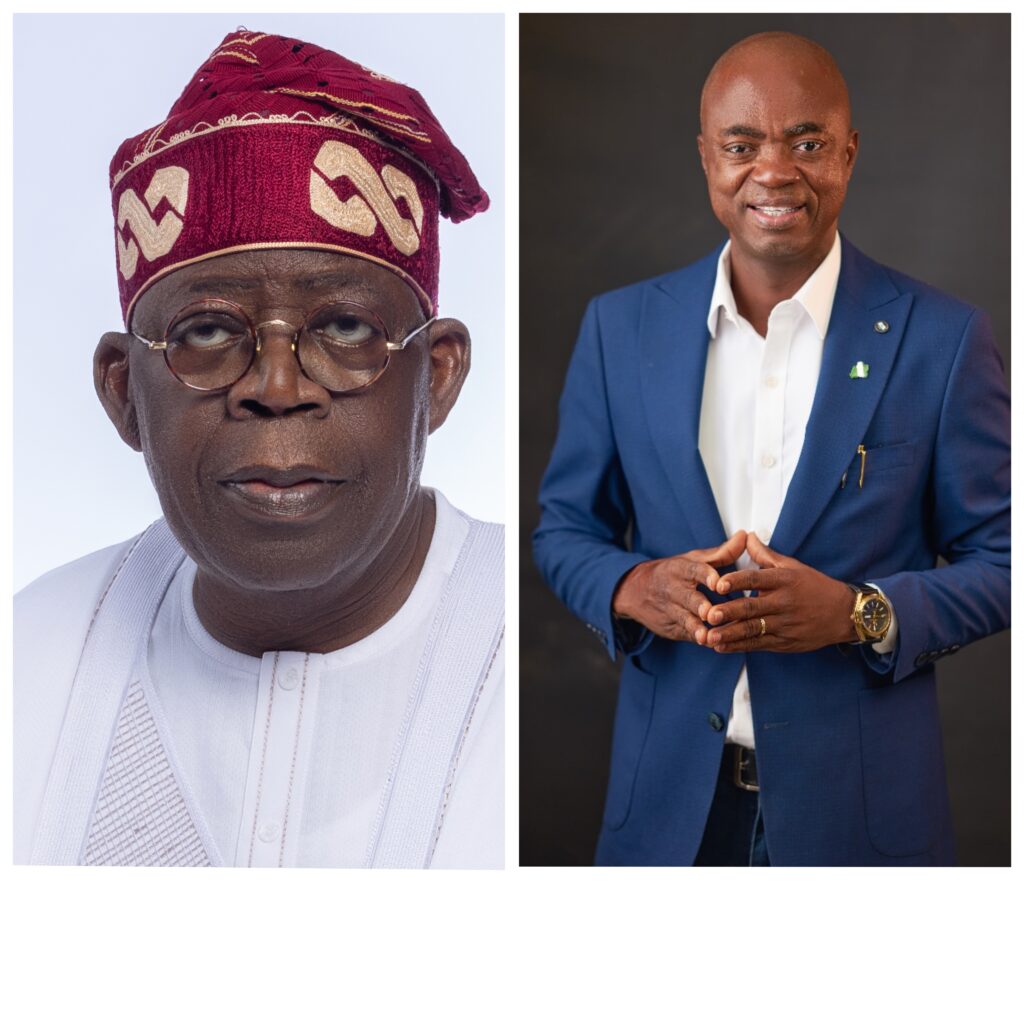
*By Matthew Ibadin*, a Security Expert
and leading security strategist, community policing leader, intelligence, investigator, property auctioneering expert, educator, and media entrepreneur. His edge is combining fact-based journalism, and security analytics. A trailblazer at the intersection of forensic real estate profiling and national security strategy, he stands as a powerful bridge between high-level intelligence, infrastructure protection, and smart, ethical real estate practices. Ibadin is more than a security consultant or property expert. He is a pioneering figure in civic based security innovation and defense policy strategy.
Matthew Ibadin*,A Security Expert
Contact.
mattsonibadin@gmail.com