
BEYOND THE CAMPAIGN COUNCIL: WHAT HOPE UZODIMMA IS QUIETLY BUILDING FOR TINUBU AND THE APC AHEAD OF 2027
By Hon Dr Abiazim Chima
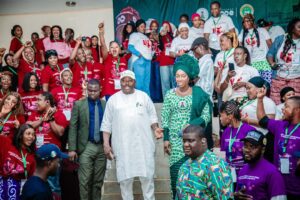
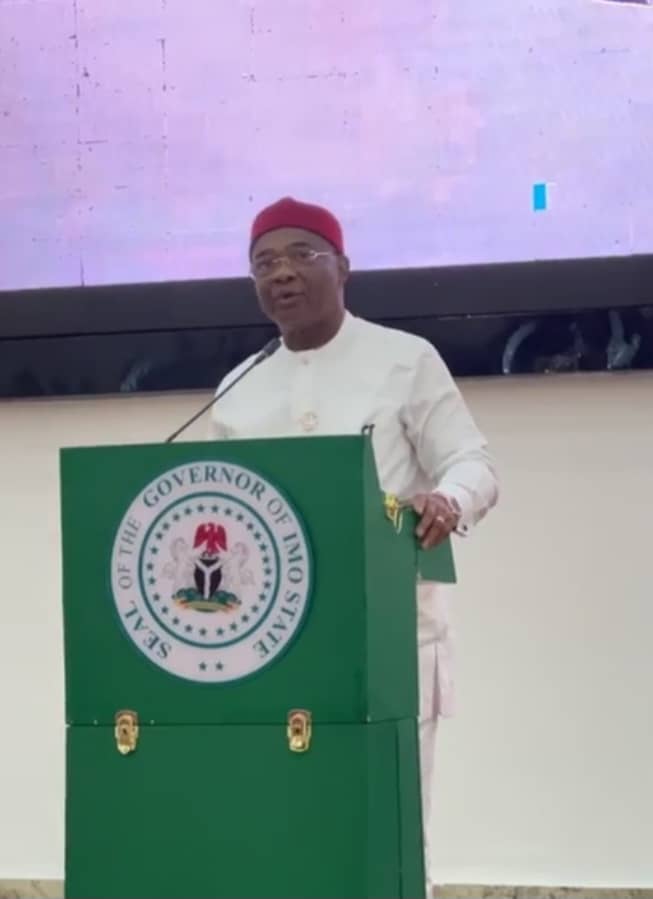
Sometimes the clearest evidence of political loyalty is not found in speeches but in the responsibilities a leader willingly carries when the stakes are highest. The inauguration of the APC Campaign Council in Imo State by His Excellency, Distinguished Senator Hope Uzodimma, CON, should therefore not be reduced to another political event. Look beyond the ceremony and something more consequential becomes visible: a Governor systematically converting his influence, relationships, time and political structure into an organised grassroots force for President Bola Ahmed Tinubu and the entire All Progressives Congress ahead of 2027.
There is a difference between declaring support for a President and putting one’s political machinery behind that declaration. Uzodimma appears determined to demonstrate the latter. His message to APC members was particularly significant: party loyalty must not become a convenient arrangement in which people identify with APC publicly but secretly pursue conflicting political interests. More importantly, he insisted that members must work to deliver every APC candidate-from President Bola Ahmed Tinubu through the National Assembly contests and down to the Imo State House of Assembly. That is bigger than campaigning for one individual. It is an argument for the institutional strength of the party itself.
This is precisely where the significance of Uzodimma’s emerging role in 2027 deserves closer examination. He is not merely asking others to support Tinubu while remaining comfortably within the boundaries of Imo politics. As Chairman of the Progressive Governors’ Forum, leader of the Renewed Hope Ambassadors and Secretary of the APC Presidential Campaign Council, he has accepted responsibilities that put his own political capital directly behind the President’s re-election project. These are not ornamental titles. Each comes with expectations of coordination, reconciliation, mobilisation and delivery.
There is something politically instructive about that commitment. Governor Uzodimma is approaching 2027 from the understanding that elections cannot be won merely by assembling prominent names at the national level. Political victory eventually travels through communities until it reaches the voter. That explains why his directive that the campaign structure be replicated across the 27 Local Government Areas, wards and polling units matters far beyond Imo State. He is effectively taking a national political objective and giving it a grassroots delivery mechanism.
And therein lies an aspect of Uzodimma’s politics that critics sometimes overlook. He understands structure.
Political enthusiasm without organisation can produce noise without votes. Organisation without loyalty can produce structures that collapse when they are most needed. Uzodimma’s strategy appears designed to address both weaknesses simultaneously: establish the structure, demand genuine commitment, reconcile the interests within it and push responsibility down to the polling unit.
It is also significant that he rejected selective loyalty. Politics often produces the temptation for individuals to support a presidential candidate while sabotaging a local candidate, embrace a senatorial candidate while abandoning an Assembly candidate, or publicly identify with a party while privately financing its opposition. Uzodimma’s position challenges that culture. If APC presents candidates, then APC members carrying the party’s identity should accept a collective obligation to work for their success. Whether one examines that position politically or organisationally, the logic is difficult to fault: a political party cannot become formidable when its members are permitted to choose when loyalty begins and where it ends.
For President Tinubu, this kind of commitment from a governor carries particular value. The President does not merely need endorsements from political leaders; he needs leaders capable of translating national support into functioning grassroots networks. Uzodimma brings to that assignment his position among APC governors, his influence within the South-East and the political structures he has painstakingly built in Imo. When a governor deploys those assets towards a national political project, he is staking something substantial-his relationships, reputation and capacity to deliver.
This is why reducing Uzodimma’s support for Tinubu to political rhetoric misses the larger picture. His involvement in the Renewed Hope mobilisation architecture, his responsibilities within the Progressive Governors’ Forum, his position in the Presidential Campaign Council and now the systematic activation of structures in Imo point in one direction. He is attempting to ensure that support for the President moves beyond elite declarations and reaches the level where elections are actually determined.
There is also a broader lesson here for the South-East. Political relevance at the centre is strengthened not simply by demanding inclusion but by demonstrating capacity, reliability and strategic value. A South-East governor occupying consequential positions within the ruling party and helping coordinate a national presidential campaign inevitably creates additional channels through which the region can participate in national political conversations. That opportunity should be assessed strategically rather than dismissed because of everyday partisan disagreements.
None of this requires anyone to pretend that governance is perfect or that every citizen must agree with every government decision. Democracy does not demand such uniformity. But fairness demands that criticism should coexist with recognition when recognition is deserved. A leader who accepts responsibility must also be assessed by what he does with it. In Uzodimma’s case, the unfolding 2027 mobilisation provides a measurable test: can he organise, reconcile, mobilise and deliver?
Perhaps this is why his insistence on taking the campaign architecture down to polling units is more important than it initially appears. He is placing responsibility where results can eventually be measured. The State Campaign Council cannot deliver 2027 from Owerri alone. Neither can commissioners, political appointees or prominent party leaders deliver elections from television studios and social-media pages. Ultimately, somebody must speak with the voter in the community. Somebody must defend the government’s record. Somebody must answer difficult questions. Somebody must persuade the undecided. Somebody must bring the party’s message to the polling unit.
Uzodimma is building that chain now.
And perhaps the most revealing aspect of his approach is that he is not building it solely around himself. His directive was not “deliver Hope Uzodimma.” It was to deliver the APC family of candidates-from President Bola Ahmed Tinubu down to the State House of Assembly. In an era when political structures are frequently personalised around individual ambitions, there is strategic significance in a governor demanding collective party victory rather than selective electoral convenience.
President Tinubu’s 2027 campaign will eventually be judged nationally, but national victories are aggregates of local results. Every state matters. Every LGA matters. Every ward matters. Every polling unit matters. By beginning the organisational work early and insisting that the structure descend to the smallest electoral unit, Uzodimma is demonstrating that loyalty is most useful when it can be converted into organisation and organisation into measurable political outcomes.
This is the Hope Uzodimma story that deserves greater attention.
Not merely the Governor who inaugurated a campaign council, but the political organiser who understands that a council without grassroots penetration is only a collection of names. Not merely the APC governor who says he supports President Tinubu, but one willing to place his political machinery behind that support. Not merely a South-East political leader seeking relevance at the centre, but one accepting responsibilities by which his contribution can ultimately be measured.
The inauguration will soon disappear from the news cycle. Photographs will give way to another day’s headlines. But the political machinery activated beneath that ceremony could remain long after the cameras have left.
That is where the real story lies.
Hope Uzodimma is not merely talking about 2027. He is organising for it. And in politics, when commitment is matched by structure, discipline and grassroots organisation, that difference can determine everything.
By Hon Dr Abiazim Chima
About Author