
Inside Nigeria’s 81 Division: Leadership, Readiness, and the Quiet Work of Securing the Economic Nerve Centre


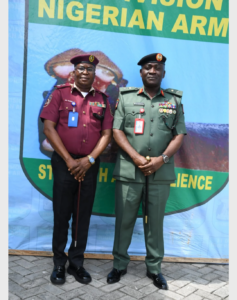
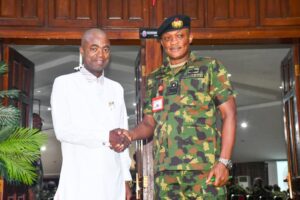
In January 2026, a new chapter began for Nigeria’s 81 Division as Adebayo Babalola assumed command as the 26th General Officer Commanding (GOC). His appointment marked not just a routine change of guard, but a strategic handover at a time when the division’s role in safeguarding the country’s economic heartbeat has never been more critical. He succeeded Farouk Umar Mijinyawa, inheriting a formation whose operational tempo reflects the complexities of modern internal security.
Headquartered in southwestern Nigeria, the 81 Division Nigerian Army carries the weighty responsibility of securing Lagos State and Ogun State—two states that together form a vital artery of commerce, industry, and population density. From bustling ports and financial districts to sprawling border communities, the division’s Area of Responsibility (AOR) demands vigilance, adaptability, and constant coordination with other security agencies.
Under Babalola’s leadership, a clear emphasis has emerged: readiness through rigorous training and inter-agency collaboration. The division’s engagement in high-level exercises, including activities linked to the Chief of Army Staff Annual Conference 2025, underscores a broader commitment to sharpening operational effectiveness. These exercises are not merely ceremonial—they serve as platforms for refining tactics, strengthening command structures, and aligning strategies with evolving security threats such as organized crime, urban unrest, and cross-border challenges.
Yet beyond the drills and deployments lies another dimension of command often less visible to the public: the welfare of the troops. Recent months have seen a series of infrastructure projects commissioned across the division—new barracks, improved residential quarters, rehabilitated access roads, and solar-powered boreholes. These initiatives signal a recognition that operational success is deeply tied to the living conditions and morale of personnel. In a demanding environment like Lagos and Ogun, where soldiers are frequently deployed in high-pressure urban settings, such improvements can have a tangible impact on effectiveness and discipline.

Discipline itself sits at the core of the GOC’s message to his troops. Babalola has been explicit in his expectations: unwavering loyalty to constituted authority, adherence to professional standards, and a zero-tolerance stance on illegal duties or misconduct. It is a directive that reflects broader efforts within the Nigerian Army to reinforce accountability while maintaining public trust—an essential currency in regions where military presence intersects daily with civilian life.

As Nigeria continues to navigate a complex security landscape, the 81 Division’s role remains pivotal. Its operations may not always dominate headlines, but its steady presence underpins stability in one of Africa’s most dynamic urban corridors. For Major General Babalola, the task ahead is as clear as it is demanding: sustain readiness, strengthen discipline, and ensure that the division remains a dependable shield over the nation’s economic core.
About Author