
Prince Folowosele Backs Tinubu Reforms, Unveils New Empowerment Drive, Calls for Diaspora Voting

By: Sesan Rufus Awobiye
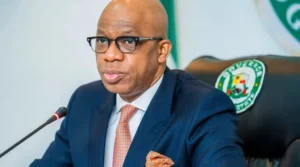
Prince Gbenga Folowosele, the All Progressives Congress (APC) Chairman in Belgium and a distinguished son of Ekiti State, has once again demonstrated his unwavering commitment to the growth and development of his people. As the pioneer of the Educraft Global Initiative Award, a highly regarded organisation that celebrates the achievements of industrious Ekiti sons and daughters, Prince Folowosele has earned his place as a quintessential Omoluabi—a true embodiment of integrity, selflessness, and service to humanity.

Through the Educraft Global Initiative Award, Prince Gbenga Folowosele has played a pivotal role in advancing human development. The organisation is widely recognised for its impactful contributions, including scholarships and various incentives that have empowered countless individuals across Ekiti State. These efforts reflect his deep passion for education, youth development, and the well-being of Ekiti Kete.
Hailing from Ijero Local Government, Prince Folowosele is not only a philanthropist but also a visionary leader whose actions consistently uplift the lives of his constituents. In a recent interview with newsmen, he revealed plans to distribute food palliatives and launch a comprehensive empowerment program in the coming weeks, aimed at alleviating poverty and equipping individuals with the tools to thrive.
Prince Gbenga Folowosele expressed his admiration for the transformational leadership of Ekiti State Governor, Mr. Biodun Oyebanji. He lauded the Governor’s numerous achievements, including the implementation of the new minimum wage, which has already improved the welfare of civil servants in the state.
Prince Gbenga Folowosele’s selflessness, visionary leadership, and unwavering commitment to humanity exemplify the qualities of a true Omoluabi. His dedication to uplifting the lives of others and his support for good governance make him a shining example.
As Africa’s most populous nation navigates a period of economic adjustment and political recalibration, Nigeria’s reform trajectory under President Bola Ahmed Tinubu continues to attract both domestic debate and international scrutiny.
From subsidy reforms to foreign exchange liberalisation, the administration has embarked on a path that prioritises long-term structural change over short-term political comfort.
In an interview with selected media, the Chairman of the ruling All Progressives Congress (APC) Belgium Chapter offers insight into the President’s leadership style, the challenges facing national security, the evolving opposition landscape ahead of the 2027 general elections, and the growing importance of Nigeria’s global diaspora.
According to the APC Belgium Chairman, President Tinubu’s leadership is best understood through his willingness to take politically difficult decisions early in his tenure.
“He is a leader who believes in confronting challenges directly rather than postponing them,” he said,
describing the President as reform-oriented and strategic in outlook. The administration’s policy direction, he noted, reflects years of political experience and a clear intention to reposition Nigeria’s economy and governance institutions for long-term sustainability.
Security remains one of Nigeria’s most pressing concerns, particularly as instability in parts of the country continues to affect economic growth and investor confidence. The APC official emphasised the importance of intelligence-led security operations and stronger coordination among Nigeria’s security agencies.
He also highlighted the need for greater investment in modern surveillance technologies, especially along Nigeria’s extensive borders.
However, he stressed that security solutions must extend beyond military and law enforcement responses.
Addressing youth unemployment, expanding economic opportunities, and promoting social inclusion, he argued, are essential to tackling the root causes of insecurity.
“A combination of firm enforcement and socio-economic intervention is critical for lasting peace,” he said.
Looking ahead to Nigeria’s 2027 general elections, discussions around a potential opposition coalition involving prominent political figures have intensified. While acknowledging that political alliances are a normal feature of democratic systems, the APC Belgium Chairman cautioned that coalitions without ideological coherence, internal unity, and grassroots structures often struggle to succeed electorally.
He pointed out that the governing party retains a nationwide organisational network and remains anchored by an incumbent administration pursuing an ambitious reform agenda. Challenging such a political structure, he suggested, would be a formidable task for any opposition alliance.
Beyond domestic politics, the interview also focused on the role of Nigerians living abroad. The diaspora, the APC official said, represents a strategic national asset whose contributions go far beyond financial remittances.
Skills transfer, technology exchange, and investments in key sectors such as healthcare, education, agriculture, and entrepreneurship continue to play an increasingly important role in Nigeria’s development.
He argued that greater institutional recognition of the diaspora’s role would strengthen national cohesion and democratic participation.
In this context, the APC Belgium Chapter has renewed calls for the introduction of diaspora voting, allowing Nigerians resident in Belgium to vote through the Nigerian Embassy in Brussels. Such a move, he said, would reinforce a sense of belonging among Nigerians abroad who remain deeply invested in the country’s future.
The APC Belgium Chapter has also called for the appointment of a credible and people-oriented Nigerian Ambassador to Belgium, capable of effectively representing Nigeria’s interests while engaging constructively with the diaspora community and European institutions.
Assessing the broader reform agenda, the APC official acknowledged that President Tinubu’s policies have imposed short-term economic pressures on citizens. Nonetheless, he maintained that subsidy reforms, foreign exchange adjustments, and institutional restructuring are necessary to restore fiscal discipline, improve transparency, and rebuild investor confidence.
Ensuring policy consistency and protecting vulnerable populations during the transition, he added, would be crucial to sustaining public trust.
As Nigeria stands at a pivotal moment in its national evolution, the APC Belgium Chairman described the current period as one of
“necessary adjustment rather than crisis.” With patience, inclusive governance, and continued engagement with Nigerians at home and abroad, he said, the country has the potential to emerge more stable, resilient, and globally competitive.
About Author