

Public Health or Mass Job Loss? Inside NAFDAC’s Renewed War on Sachet Alcohol
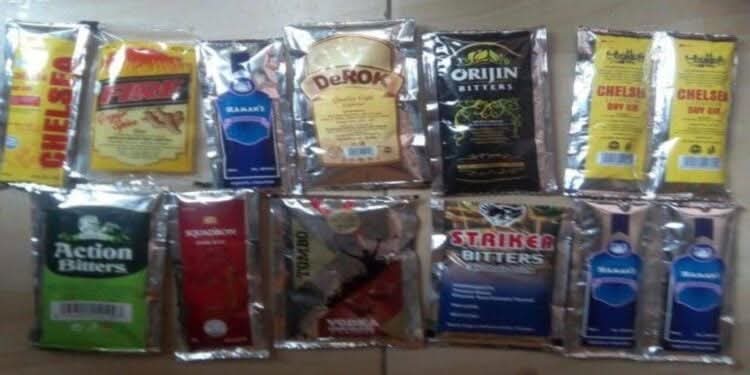
When the National Agency for Food and Drug Administration and Control (NAFDAC) announced it was resuming full enforcement of its ban on alcoholic beverages packaged in sachets and small containers below 200 millilitres, the reaction was swift—and deeply divided.
On one side stood public health advocates and policymakers who argue that cheap, high-alcohol sachet drinks have quietly become one of Nigeria’s most dangerous social threats. On the other were manufacturers, labour unions, and distributors warning that the policy could wipe out as many as 5.5 million jobs in an economy already under strain.
At the heart of the debate is a familiar Nigerian dilemma: how to balance economic survival with public health protection.
Why NAFDAC Says Sachet Alcohol Is a National Threat
NAFDAC insists its renewed crackdown is not a sudden policy shift, nor an attack on the alcohol industry. Rather, it says it is the long-overdue enforcement of a ban agreed upon more than six years ago.
According to a statement signed by the agency’s Director-General, Prof. Mojisola Christianah Adeyeye, the ban targets only spirit drinks packaged in sachets and containers smaller than 200ml, not all alcoholic beverages. Larger formats remain approved for production and sale.
But Adeyeye says the small-pack alcohol market has spiralled into a public health crisis.
Cheap, widely available, and easily concealed, sachet alcohol has been linked to underage drinking, alcohol dependency, domestic violence, road traffic accidents, school dropouts, and rising social disorder, particularly in low-income and high-density communities.
“Many parents do not even know their children consume sachet alcohol because the pack size is small, cheap and easily concealed,” she said.
NAFDAC points to disturbing reports from schools, including an incident in which a student allegedly told a teacher he could not sit for an examination without first consuming sachet alcohol—a statement that, for regulators, symbolises how normalised alcohol dependence has become among young people.
Warning labels such as “Not for children,” the agency admits, have failed to curb misuse.
An Old Agreement, a New Deadline
The roots of the ban date back to December 2018, when NAFDAC signed a Memorandum of Understanding with the Federal Ministry of Health and Social Welfare, the Federal Competition and Consumer Protection Commission (FCCPC), and alcohol manufacturers.
That agreement set January 31, 2024 as the deadline for phasing out sachet and small-volume alcohol. Manufacturers were later granted an extension until December 2025 to exhaust existing stock and retool production lines.
NAFDAC says the latest enforcement push follows a recent resolution of the Nigerian Senate and aligns with Nigeria’s commitments under the World Health Assembly Global Strategy to Reduce the Harmful Use of Alcohol.
“This ban is not punitive; it is protective,” Adeyeye said. “We cannot continue to sacrifice the well-being of Nigerians for economic gain. The health of a nation is its true wealth.”
Industry Pushback: ‘You’re Killing Jobs’
The industry response has been fierce.
On January 23, members of the Distillers and Blenders Association of Nigeria, alongside the Nigerian Labour Congress (NLC) and the Trade Union Congress (TUC), protested at NAFDAC’s Lagos office. Their message was blunt: enforcing the ban now could trigger massive job losses across manufacturing, distribution, retail, and informal trading networks.
Industry groups argue that sachet alcohol caters largely to low-income consumers who cannot afford larger, more expensive bottles. Removing it, they say, will not stop drinking but could drive consumption underground, encouraging unregulated and potentially more dangerous alternatives.
The Manufacturers Association of Nigeria (MAN) and the Food and Beverage Tobacco Outgrowers and Bottlers (FOBTOB) have also criticised the policy as inconsistent and economically damaging, warning that thousands of small businesses could collapse.
For workers in bottling plants, transport chains, and roadside retail kiosks, the issue feels less like a health debate and more like a question of daily survival.
No More Extensions
Despite the backlash, NAFDAC has drawn a firm line.
The agency says no further extensions will be granted beyond December 2025 and has called on manufacturers, distributors, and retailers to comply fully with the directive.
To soften the impact, NAFDAC says it will intensify nationwide public sensitisation campaigns in partnership with the Federal Ministry of Health and Social Welfare, the FCCPC, and the National Orientation Agency, focusing on the dangers of alcohol misuse—especially among young people.
A Familiar Nigerian Crossroads
The sachet alcohol ban has become a symbol of a broader national struggle: how to protect public health without worsening unemployment, and how to regulate harmful products in an economy where millions survive in informal markets.
For now, NAFDAC is betting that long-term health gains will outweigh short-term economic pain. Whether Nigerians—and the labour market—can absorb that pain remains an open and highly charged question.
About Author