
THE FIRST 1,000 DAYS: INSIDE NIGERIA’S SILENT NUTRITION BATTLE
By: Sesan Rufus Awobiye
Despite increased awareness, poor infant feeding practices and food insecurity continue to fuel stunting and micronutrient deficiencies in children under five
By Momentous Media | Lagos, Nigeria
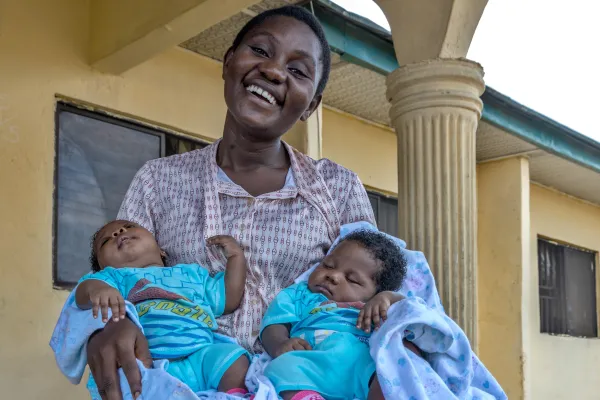
It is 8 a.m. at a Primary Health Centre in Mushin, Lagos, and the queue is already long. Among the mothers waiting is 23-year-old Blessing Emeka, clutching her nine-month-old son, David. He looks smaller than his age, his legs thin, his eyes dull.
Nurses say he is moderately stunted. Blessing did everything she thought was right. She breastfed him exclusively for two months, then introduced pap and water because she had to return to her trading stall. She did not know that those first six months of exclusive breastfeeding, and the quality of what comes after, could define his entire future.
David is not alone. He is one of the faces of Nigeria’s most persistent but least discussed crisis — child malnutrition.
A NATIONAL EMERGENCY IN SLOW MOTION
According to the 2023-24 Nigeria Demographic and Health Survey (NDHS) and UNICEF data, Nigeria has the second-highest burden of stunted children in the world, with 32 per cent of children under five stunted, 7 per cent wasted and 25 per cent underweight. This means one in three Nigerian children is not growing to their full physical and cognitive potential due to chronic undernutrition.
Nutritionists call it “hidden hunger” — not just the lack of food, but the lack of the right nutrients at the right time.
“The damage is irreversible if not addressed within the first 1,000 days — from conception to a child’s second birthday,” says Dr. Ifeoma Akinola, a public health nutritionist based in Lagos. “After two years, a stunted child’s brain development, immunity and future earning capacity are already compromised. We are not just losing children; we are losing human capital.”
WHEN KNOWLEDGE IS THE MISSING NUTRIENT
For many households, the problem is not just poverty, but misinformation.
The World Health Organization recommends exclusive breastfeeding for the first six months, followed by the introduction of safe, diverse and nutrient-rich complementary foods while continuing breastfeeding up to two years and beyond.
Yet, in Nigeria, exclusive breastfeeding rate stands at only 29 per cent, according to NDHS 2023-24. Water, herbal concoctions and diluted pap are introduced early, exposing infants to infection and depriving them of essential antibodies.
“Our grandmothers tell us breast milk alone is not enough, that the child needs water to quench thirst in hot weather,” Blessing confesses. “No one told me water could make my baby sick.”
Experts point to a critical gap in nutrition education. Many mothers, especially in low-income and rural settings, lack access to counselling on dietary diversity — the need to combine at least five out of eight food groups daily for infants: breast milk, grains, legumes, dairy, flesh foods, eggs, vitamin-A-rich fruits and vegetables, and other fruits and vegetables.
A recent National Food Consumption and Micronutrient Survey revealed that less than 20 per cent of children aged 6-23 months in Nigeria meet the minimum dietary diversity.
FROM FARM TO PLATE: THE AFFORDABILITY QUESTION
Even when knowledge exists, affordability is a barrier. The cost of a healthy diet has surged. Eggs, meat, fish and fortified foods — critical sources of protein, iron and zinc — are increasingly out of reach for average families battling inflation.
Mrs. Toyin Ojo, a mother of three in Ogun State, says she knows eggs are good for her children but can only afford them twice a week. “One crate is almost N5,500. Before, I could buy fish, now I buy only ponmo to flavour soup,” she says.
This economic pressure is forcing families into calorie-rich but nutrient-poor diets, dominated by cassava, white rice and yam, leading to a double burden of malnutrition where undernutrition coexists with overweight and obesity in the same communities.
WHAT IS BEING DONE — AND WHAT MUST BE DONE
The Federal Government, through the National Council on Nutrition and the Nutrition 774 initiative, has pledged to strengthen nutrition interventions at the grassroots, including the promotion of locally available nutritious foods, micronutrient supplementation and mandatory food fortification.
Private sector players in the food and beverage industry have also invested in fortification of staples like bouillon cubes, cereals and complementary foods with iron, iodine and vitamins, and in community nutrition education.
But experts argue that sustainable change requires more than intervention; it requires integration.
“We need to mainstream nutrition into agriculture, education and social protection,” Dr. Akinola argues. “Farmers must be incentivized to grow biofortified crops like Vitamin A cassava and maize. Schools must teach nutrition. And health workers must be equipped to counsel mothers at every antenatal and postnatal visit, not just weigh babies.”
For Blessing, the lesson has come at a cost, but she is determined. Under the guidance of the nurses at Mushin PHC, she has enrolled David in a 12-week infant and young child feeding counselling programme, learning how to enrich pap with ground crayfish, soybeans and palm oil, and how to prepare affordable nutrient-dense meals from local foods.
“I want him to grow well,” she says, gently rocking him. “I will do what they taught me.”
His future, and that of millions like him, depends on how well Nigeria feeds its first 1,000 days.
About Author