
From Farm to Factory: How Nestlé Nigeria’s 2026 Regenerative Agriculture Push Is Rebuilding Trust With Small holder Farmers
By: Momentous Media | Lagos
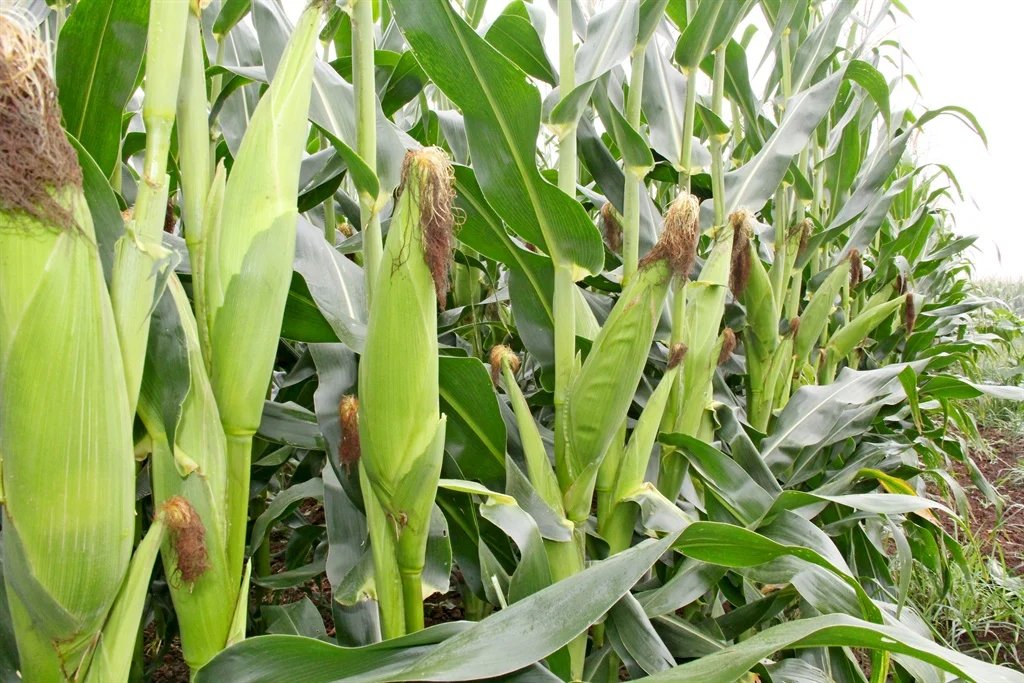
LAGOS, NIGERIA – In a year when Nigeria’s agriculture sector recorded 4.39% growth in Q2 2026 – its strongest performance since 2021 – the real story is not in Abuja’s statistics. It is in the farms of Kaduna, Ogun and Oyo, where smallholder farmers who grow the maize, sorghum and soybean that feed Nigeria’s factories are finally seeing farming as a business, not survival.
At the centre of that shift is Nestlé Nigeria’s Creating Shared Value agenda, which in 2026 has moved beyond buying raw materials to investing directly in the farmers who produce them.
The 2026 Reality: Growth But Still Fragile
According to the Federal Ministry of Agriculture and Food Security, crop production grew by 3.66% in Q2 2026, driven by the National Agricultural Growth Scheme and Agro-Pocket (NAGS-AP) which helped smallholder farmers produce 2.5 million metric tonnes of staple foods over four farming seasons. Wheat production also jumped from 120,000 metric tonnes to about 420,000 metric tonnes.
But in November 2026, farmers in Kaduna are warning of poor harvests. Irregular rainfall ruined maize and rice, pushing a bag of maize from N20,000 to N30,000 – N40,000 and local rice from N48,000 to N62,000 – N70,000.
That is why Nestlé Nigeria’s 2026 approach matters – it is not just about yields, it is about resilience.
What Nestlé Is Doing Differently in 2026
Through its regenerative agriculture programme and local sourcing partnerships, Nestlé Nigeria is working with thousands of smallholder farmers to:
1. Adopt climate-smart practices: Cover cropping, composting, and reduced tillage to protect soil health – directly aligned with the Federal Government’s National Soil Health and Fertility Programme launched in 2026.
2. Access quality inputs: In a year when the Federal Government targeted 1.1 million metric tonnes of fertiliser for farmers, Nestlé’s agronomists are training farmers on correct application to reduce waste and improve soil, not deplete it.
3. Get finance and markets: Through cooperatives, farmers are becoming bankable. This mirrors the government’s Renewed Hope Cooperative Reform and Revamp Programme (RH-CRRP 2030) which aims to transform cooperatives into credible, transparent economic blocs.
4. Reduce post-harvest losses: Government target in 2026 is to cut losses from 40% to below 20% through storage and cold-chain investment. Nestlé’s aggregation centres and training on drying and storage are helping farmers in its supply chain achieve that goal faster.
Voices From The Farm
A maize farmer in Ogun State, who supplies to Nestlé’s ecosystem, told Momentous Media:
“Before, we planted and prayed for rain. Now, Nestlé’s people teach us when to plant, how to test our soil, how to store. My harvest did not double overnight, but my loss reduced. I now sell more of what I grow.”
A woman farmer in Kaduna, who is part of a women-led cooperative, added:
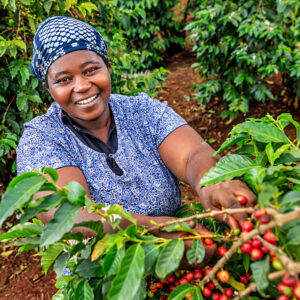
“We used to be left out of meetings. Now we are in the cooperative, we get training, we get inputs. Agriculture is now our business.”
That aligns with the Federal Government’s message in 2026: food security will not be secured by speaking _for_ women farmers, but by ensuring they have the space, tools and opportunity to organise, invest, produce and grow.
Mechanization Meets Smallholder Reality
In 2026, the Federal Government commissioned 2,000 tractors under the Renewed Hope Agricultural Mechanisation Programme to service over 1.2 million farmers.
Nestlé is complementing this by promoting shared mechanisation services through cooperatives, so that a farmer with 1 hectare – the average size supported under the N250 billion wet-season programme for 1 million farmers in 2026 – can still access mechanised land preparation without owning a tractor.
Why This Matters For Nutrition
Nestlé’s agriculture work is directly linked to nutrition. When farmers produce more nutritious crops like soybean and quality maize sustainably, factories can produce affordable, nutritious foods for Nigerian families. It closes the loop: healthy soil, healthy crops, healthy people.
The Challenge Ahead
Despite the progress, challenges remain: insecurity in major food-producing belts, unpredictable rainfall, and high input costs. The government in 2026 deployed agro-rangers to protect farmlands and is pushing dry-season farming to bridge the shortfall.
For Nestlé’s model to scale, experts say three things must happen:
– More private-sector investment in irrigation and dams
– Stronger extension services reaching rural farmers
– Guaranteed minimum price so farmers are not forced to sell at a loss
Conclusion
In 2026, Nigeria is proving that agriculture can grow again. But growth without farmers is just a statistic.
Nestlé Nigeria’s regenerative agriculture push shows a different path – one where a multinational does not just buy from Nigeria, but builds with Nigeria’s farmers.
If that model is sustained, the 4.39% growth of 2026 will not be a one-year bounce. It will be the beginning of a food system that nourishes tomorrow because it invested today.
About Author