
Hands That Feed The Nation – A Photo Story of Nestle Nigeria Farmers in 2026
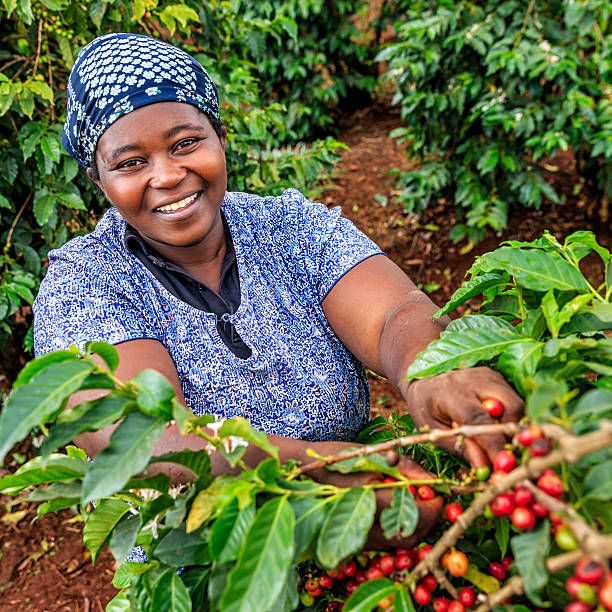
Young African woman collecting coffee berries from a coffee plant, Kenya, Africa.
By:Momentous Media, Lagos
INTRODUCTION
This photo essay documents the daily reality of smallholder farmers within the Nestle Nigeria agriculture supply chain in 2026. In a year when Nigeria recorded 4.39 percent growth in agriculture in Q2 2026, these images show who is behind that growth. They show the soil, the hands, the women, the cooperatives, and the harvest that connects the farm to nutrition in Nigerian homes.
The photos were taken in Ogun State, Oyo State and Kaduna State between August and October 2026 during farm visits, cooperative meetings and harvest aggregation.
PHOTO 1
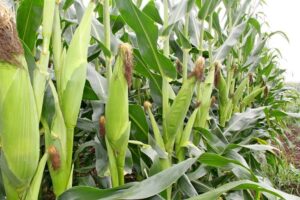
Caption: Dawn in Ogun State. A maize farmer walks into his farm at 6am, hoe on his shoulder. In 2026, many farmers have shifted to early morning work to beat the heat and unpredictable rainfall.
Location: Ogun State, August 2026
Photo Credit: Momentous Media
PHOTO 2
Caption: Testing the soil before planting. A Nestle-trained agronomist shows a farmer how to test soil health using a simple kit. Soil health is now central to Nestle Nigeria regenerative agriculture work and the Federal Government National Soil Health and Fertility Programme in 2026.
Location: Oyo State, September 2026
Photo Credit: Momentous Media
PHOTO 3
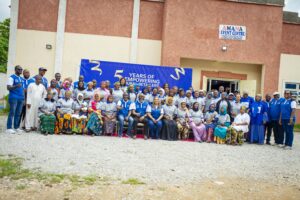
Caption: Women at the centre. Women farmers sort freshly harvested maize at a cooperative aggregation centre. Women make up a large share of smallholder labour in Nigeria, and in 2026 cooperatives supported by Nestle are giving them direct access to training, inputs and markets.
Location: Kaduna State, September 2026
Photo Credit: Momentous Media
PHOTO 4
Caption: Shared mechanisation. A tractor under the Renewed Hope Agricultural Mechanisation Programme prepares land for a cooperative. The Federal Government commissioned 2000 tractors in 2026 to support over 1.2 million farmers. Nestle partner cooperatives use shared services so a farmer with one hectare can still access mechanisation.
Location: Oyo State, October 2026
Photo Credit: Momentous Media
PHOTO 5
Caption: Reducing loss after harvest. A farmer spreads maize to dry properly on tarpaulin before bagging. In 2026, Nigeria aims to cut post-harvest losses from 40 percent to below 20 percent. Proper drying and storage training is helping farmers in the Nestle supply chain keep more of what they grow.
Location: Ogun State, October 2026
Photo Credit: Momentous Media
PHOTO 6
Caption: From farm to factory. Bags of quality maize and soybean are loaded for delivery to Nestle aggregation centres. This is the final link – healthy soil, healthy crops, and affordable nutrition for Nigerian families.
Location: Ogun State, October 2026
Photo Credit: Momentous Media
PHOTO 7
Caption: The next generation. A young farmer holds his child beside his soybean plot. For many farmers, the hope in 2026 is not just higher yield, but that farming becomes a profitable business their children will be proud to continue.
Location: Kaduna State, October 2026
Photo credit: Momentous Media
CLOSING NOTE
These seven images tell one story. Nigeria agriculture is growing again in 2026, but that growth is carried by hands in the field. Nestle Nigeria regenerative agriculture work, through soil health training, cooperative support, mechanisation and storage, is helping those hands produce more and lose less.
About Author