
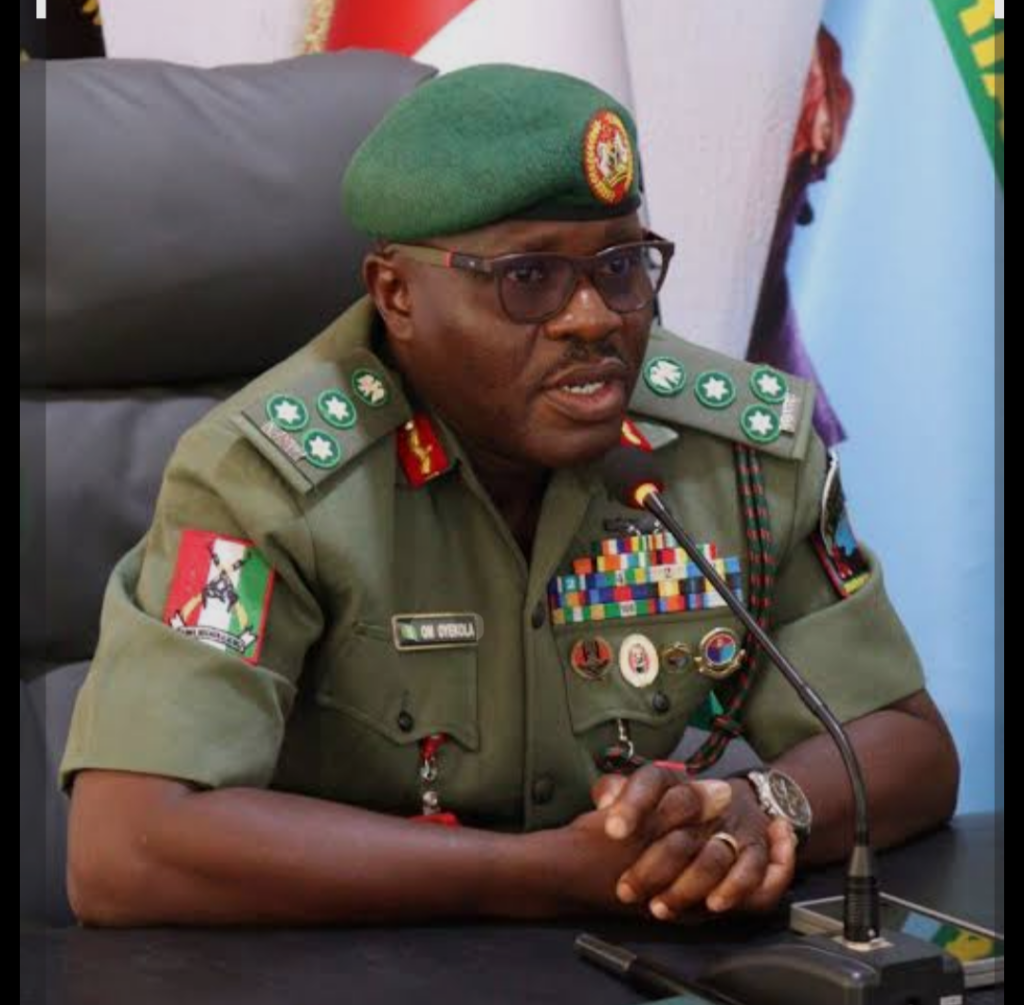
Power, Progress, and Purpose: The Enduring Legacy of Olawale Matthew Oyekola
By: Sesan Rufus Awobiye
In the structured world of military command—where discipline, hierarchy, and strategy define daily operations—true leadership is often measured not only by orders given, but by lives improved. For many who have lived and served within the Nigerian Army’s formations, Brigadier General Olawale Matthew Oyekola represents that rare blend of authority and empathy: a leader whose influence is felt long after his posting has changed.

His story, particularly across his time in 22 Brigade and later at 9 Brigade in Ikeja Cantonment, is one of deliberate transformation—of systems, structures, and human experience.
Laying the Foundation at 22 Brigade
Before the sweeping changes that would later define his name at Ikeja, Oyekola had already begun shaping his leadership identity at 22 Brigade. There, his focus was clear: build people, and the institution will thrive.
One of his most notable interventions was the development of a modern educational facility within the brigade’s training school. What may have appeared as a routine infrastructure project quickly evolved into something more meaningful. The upgraded facility provided a structured and motivating environment for learning, elevating the standard of training and reinforcing professionalism among personnel.
For officers and soldiers alike, it signaled a shift in mindset—one that placed knowledge and preparation at the center of military excellence.
Arrival at Ikeja Cantonment: A Community in Need
When Oyekola assumed command at 9 Brigade, Ikeja Cantonment was grappling with a persistent challenge that affected nearly every aspect of daily life: unreliable electricity.
Residents recall a time when power supply was limited to just a few hours a day—sometimes as little as three. Homes were left in darkness, routines were constantly disrupted, and operational efficiency suffered. It was an issue that had lingered for years, gradually eroding morale within the barracks.
Into this environment stepped a leader determined not just to manage the situation, but to change it.
Rewriting the Power Narrative
One of the most defining aspects of Oyekola’s tenure at 9 Brigade was his decisive approach to restoring stable electricity.
Through a combination of infrastructure upgrades and administrative efficiency, power supply within the cantonment was significantly improved. For the first time in years, residents experienced consistency—an everyday necessity that had long felt out of reach.
Equally transformative was the introduction of a rapid-response system to address electrical faults. Where issues previously dragged on for days, they were now resolved within hours—typically between three to four hours, except in particularly complex cases. This level of responsiveness marked a cultural shift in how problems were handled.
To further strengthen the system, new transformers were installed across several streets, eliminating long-standing bottlenecks and ensuring more even distribution of power.
Beyond Electricity: Building Standards and Spaces
While power reform became a hallmark of his leadership, it was only one part of a broader vision.
Oyekola also turned attention to physical infrastructure within the cantonment. The renovation and modernization of the Brigade Commandant’s residence stood out as a symbol of this effort—setting a new benchmark for quality and maintenance within the barracks.
Such upgrades were not merely cosmetic. They reflected a deeper philosophy: that the environment in which soldiers live and work directly influences their performance, discipline, and sense of dignity.
A Human-Centered Command Style
Perhaps what most distinguishes Oyekola’s leadership is not just what he built, but how he led.
His administration was widely regarded as welfare-oriented, with deliberate efforts to support not only serving personnel but also their families, widows, and dependents. In a system where the demands of service can often overshadow personal realities, this approach resonated deeply.
It fostered trust, strengthened morale, and reinforced a sense of community within the cantonment—turning it from a place of mere residence into a more supportive and livable environment.
A Legacy That Outlives Tenure
Leadership transitions are a constant in military life, yet not all leave a lasting imprint. In the case of Brigadier General Oyekola, the systems he introduced and the standards he set continue to define operations at Ikeja Cantonment.
Residents and personnel frequently describe his tenure as a turning point—a period when long-standing challenges were confronted and resolved with clarity and commitment. Even after his departure, his absence is still felt, often in the same breath as appreciation for what he achieved.
Recognition at the National Level
Today, Oyekola serves at the highest levels of military administration in Abuja as Chief of Staff to the Chief of Army Staff—a role that places him at the center of strategic decision-making within the Nigerian Army.
For many observers, this appointment is less a promotion and more a continuation of a trajectory built on results. His rise reflects not just seniority, but a consistent record of performance, innovation, and people-focused leadership.
The Measure of True Leadership
In the final analysis, the legacy of Brigadier General Olawale Matthew Oyekola is not defined solely by rank or position, but by impact.
From improving educational infrastructure in 22 Brigade to restoring power and dignity in 9 Brigade, his work illustrates a fundamental truth: leadership, at its best, is about creating conditions where people and institutions can thrive.
His story serves as a reminder that even within rigid systems, purposeful leadership can drive meaningful change—one decision, one project, and one community at a time.